
Artificial intelligence has stopped being a headline and started being infrastructure. It runs quietly inside the apps on your phone, the platforms your business depends on, the algorithms that surface information, and the systems that power healthcare, retail, and scientific research. Most of the time, you do not notice it. That invisibility is precisely the point and it is also what makes this moment so easy to misread. For industries like India's IT sector, which contributes over 200 billion dollars in annual exports, the implications are not abstract. Software teams, SaaS providers, and enterprises are navigating a genuine shift in how work gets done, how products get built, and what skills create lasting value.
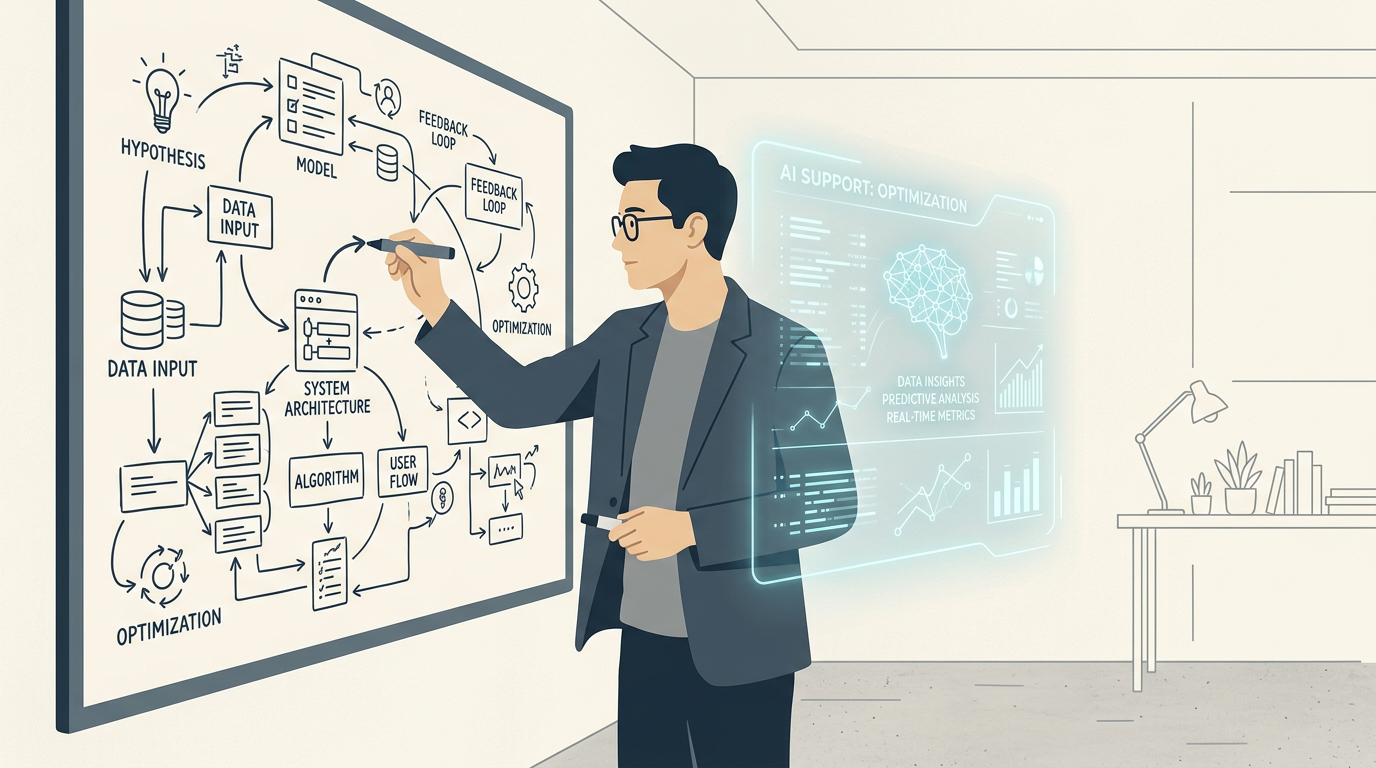
The Intelligence That Works in the Background
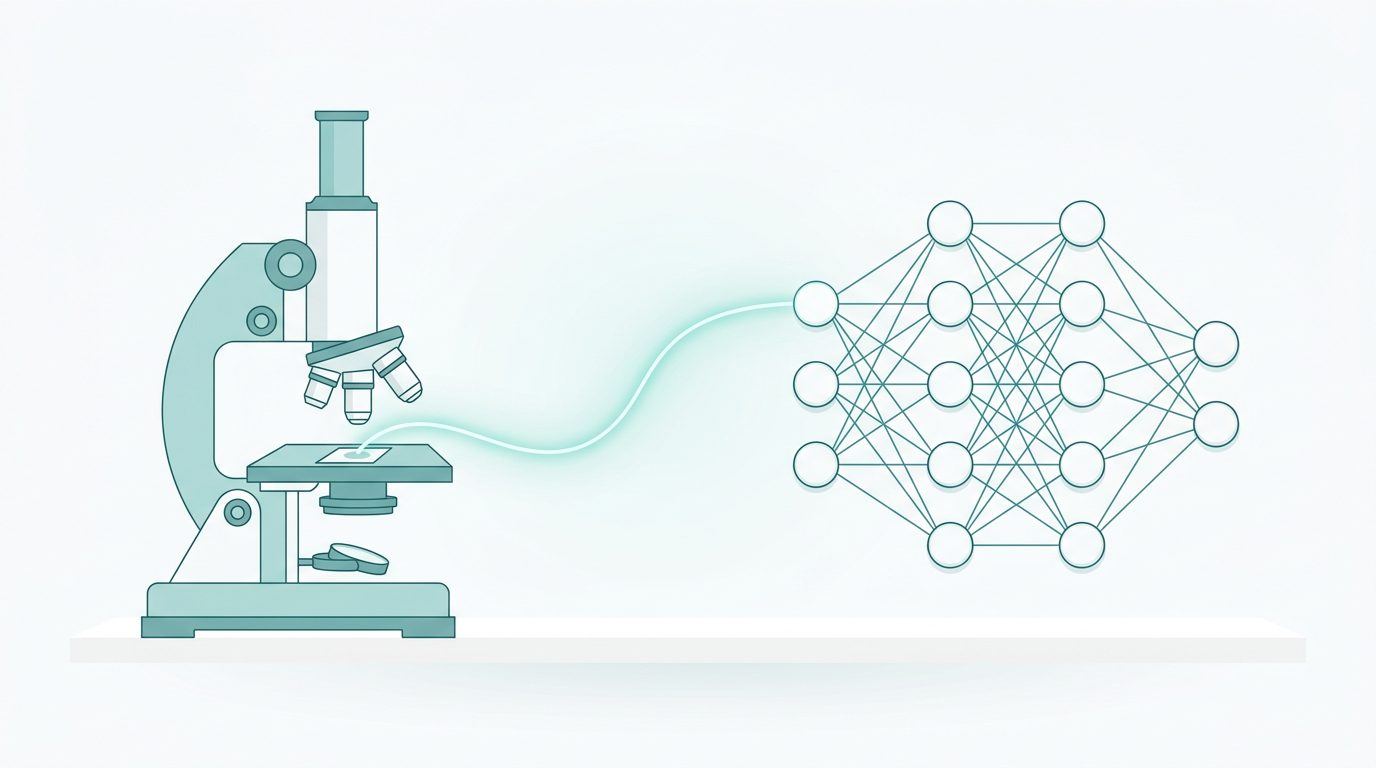
The most consequential applications of artificial intelligence are rarely the ones that get the most attention. While AI-generated images and chatbots dominate public conversation, the deeper transformation is happening inside research labs, hospital systems, and cloud infrastructure largely out of sight. In healthcare, machine learning models are accelerating diagnostics, supporting drug discovery pipelines, and helping clinicians identify patterns across datasets too large for any human team to process. In scientific research, AI systems reduce the time between hypothesis and insight compressing research cycles that once took years into processes that take weeks. For the end user, none of this appears as technology. It appears as faster results, more accurate outcomes, and systems that simply work better than they used to. This is AI operating at its most powerful: not as a visible product feature, but as invisible leverage applied to complex problems.
What Intelligence Actually Means, Beyond the Algorithm
The word intelligence gets applied loosely to systems that are, at their core, highly sophisticated pattern-matching engines. Social media algorithms, recommendation engines, and automated pricing tools are impressive pieces of engineering but they optimize for what is measurable, not for what is meaningful. Real intelligence the kind that matters in both human and organizational contexts involves understanding nuance, reasoning across unfamiliar situations, and making decisions that account for context beyond what the data explicitly shows. Today's AI systems are genuinely remarkable at recognizing patterns within defined domains, but they still depend entirely on human judgment to determine which problems are worth solving, which outcomes are worth optimizing for, and when the data is pointing in a misleading direction. The most important thing to understand about AI right now is that it amplifies direction. It makes good judgment more powerful and poor judgment more expensive.
How Software Development Is Changing
Software development has always evolved in response to new capabilities from desktop computing to the internet, from on-premise infrastructure to cloud platforms. The current shift is no different in kind, but it is unusually fast in pace. With AI-assisted development tools, automation frameworks, and machine learning integrated into the development lifecycle, engineers are spending less time on repetitive implementation and more time on architecture, system design, and the harder questions around scalability, reliability, and user experience. The work is shifting upstream toward decisions about what to build and how it should behave, rather than the mechanics of building it. For product teams, this means considerations like usability, latency, pricing strategy, and customer pain points are becoming more central to engineering conversations, not less. Technology is becoming easier to build. The question of what is worth building is becoming harder to answer and more important to get right.
Why Creativity and Customer Experience Matter More as AI Scales
There is a pattern emerging across every industry where AI is being deployed at scale: the more AI handles execution, the more differentiation shifts to experience. Any sufficiently funded team can now access capable AI tools. What they cannot automate is the judgment that determines how those tools get applied to create something customers actually prefer. In retail, AI-powered personalization and inventory optimization improve efficiency but the brands that win are the ones that understand their customers emotionally, not just behaviorally. In digital products, invisible automation can make an app feel faster and more fluid but the products people return to are the ones that feel like they were designed with genuine understanding of what users need. Creativity is not threatened by AI. It is being elevated by it, because everything that can be automated is being automated leaving creativity as one of the few remaining sources of genuine competitive advantage.
Judgment, Taste, and the Human Differentiator
As machines handle more of the execution layer, the premium on human judgment increases. Deciding what to build, how to price it, which problems are actually worth solving, and which trends are distractions none of this can be delegated to an algorithm. This applies as directly to a founder choosing a product direction as it does to a healthcare organization deciding which AI initiative to pursue, or a software team determining which customer pain point deserves the next sprint. AI can surface the data, highlight the patterns, and model the scenarios. But interpretation understanding what a metric actually means, why a customer behaves a certain way, what a trend signals about a deeper shift remains irreducibly human. Taste is not a soft skill in the age of AI. It is a strategic asset.
Learning Across Disciplines in an AI-Connected World
One of the less discussed consequences of AI is how it is dissolving the walls between disciplines. Healthcare is borrowing from machine learning. Software engineering is borrowing from cognitive science. Retail strategy is borrowing from behavioral economics. The tools that AI provides pattern recognition across massive datasets, rapid synthesis of complex information make it easier than ever to develop genuine understanding across multiple fields. For individuals, the challenge is no longer access to knowledge. It is the discipline to choose which knowledge to pursue deeply, and the judgment to apply it where it actually creates value. The most capable people in the next decade will not be those who specialized narrowly they will be those who built genuine depth in one area and used AI to extend their reach into adjacent ones.
Using AI Without Losing the Ability to Think
AI can either strengthen your thinking or quietly erode it, and the difference comes down entirely to how deliberately you use it. When AI is used as a shortcut to bypass understanding, the output improves but the person using it gets weaker. When it is used as a tool to test assumptions, explore alternatives, and stress-test reasoning, it makes the person using it sharper. The goal is not to avoid AI avoiding it is neither realistic nor strategic. The goal is to use it in a way that deepens your understanding rather than substituting for it. Ask AI to challenge your thinking, not just confirm it. Use it to go further with an idea you have already started, not to generate the idea in your place. The people who will get the most from AI are the ones who bring the most to it.
What the Near Future Actually Looks Like
Over the next several years, AI capabilities will become more deeply embedded across robotics, healthcare infrastructure, retail environments, and consumer devices. Smartphones will become more context-aware. Cloud platforms will become more efficient. In-store and digital experiences will feel more responsive and more personalized. Most of this will remain invisible to the people experiencing it. What they will notice is that things work better with less friction, more relevance, and a quality that feels almost intuitive. The technology will recede further into the background as it becomes more capable, which is exactly what good infrastructure does.
Technology That Serves People
Artificial intelligence is not removing the human element from technology. It is clarifying which human elements were always most essential creativity, judgment, empathy, and the ability to ask questions that data alone cannot answer. The people and organizations that will shape the next generation of software, science, and human experience are those who combine genuine technological fluency with the wisdom to use it in service of something meaningful. The future does not belong to AI. It belongs to people who know what to do with it.