A website often introduces your work before you get the chance to explain it yourself.
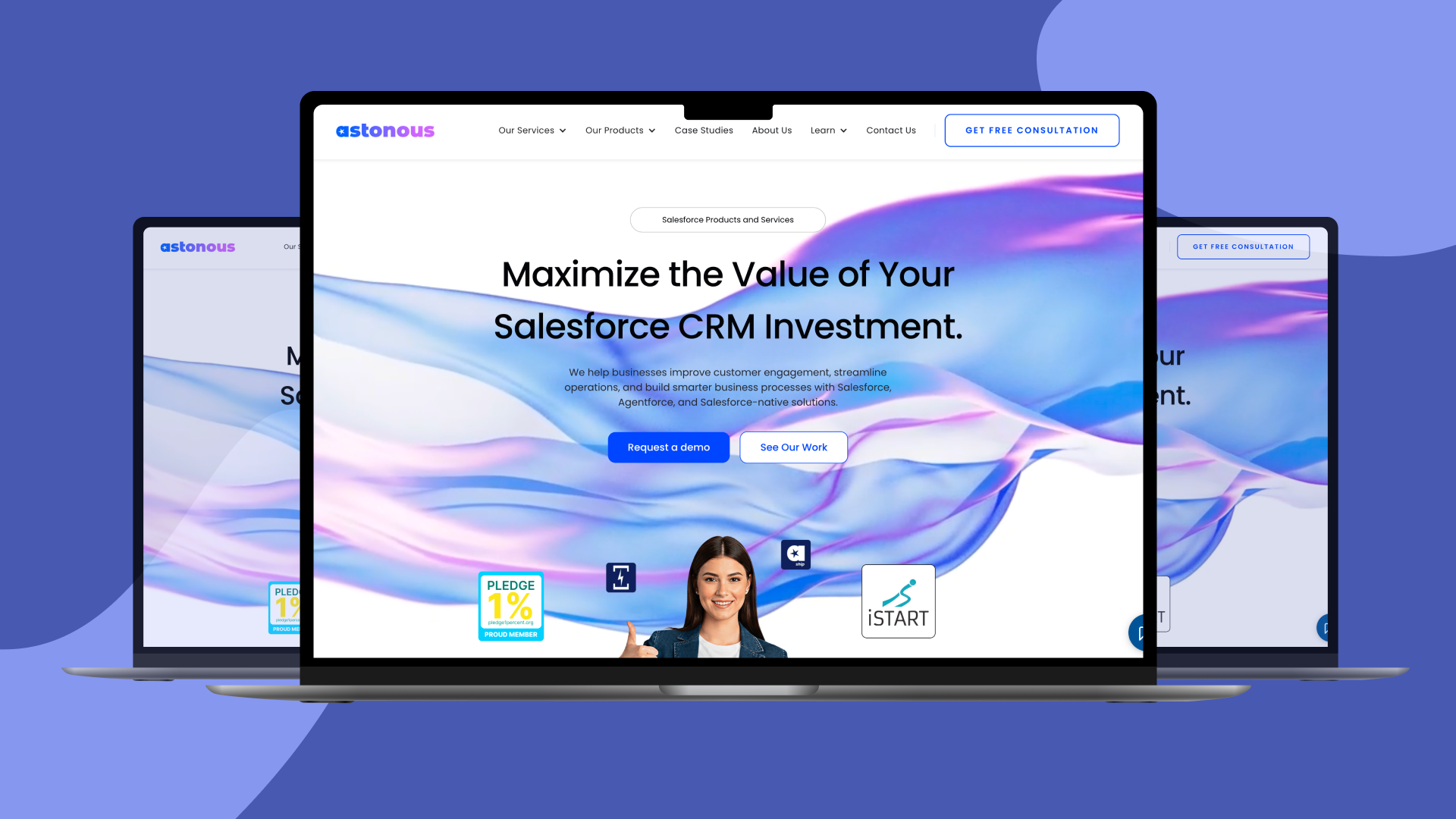
For Astonous, I wanted that introduction to reflect the work happening behind the scenes: the Salesforce solutions we build, the products we develop, and the customers we help. That thought became the starting point for the Astonous website redesign. I wanted to create a website that people could understand easily and that our team could keep updating as we grew.
The journey began with research and took shape through design, feedback, and a Webflow build.
Why we decided to redesign the Astonous website
Our earlier website, built on Salesforce Experience Cloud, had given Astonous an online home. Its static pages introduced the company, and we saw an opportunity to expand the information available to visitors.
Our services needed more detailed explanations. Astonous Ship needed a dedicated product experience. Customer projects deserved individual case studies that explained the challenges, solutions, and results. Publishing also needed to become easier. In our previous setup, adding a blog involved preparing and storing content and images, selecting the assets for the page, and then publishing.
These needs shaped the goal: a clearer website for visitors and a simpler process for the people managing it.
.png)
Researching competitors and learning from designers
Before settling on a direction, I surveyed competitors’ websites, including other Salesforce consulting and product companies. I studied how they presented their services, organised information, and told customer stories. That research gave me a useful reference point. I wanted Astonous to offer an experience that could stand out through clear content, thoughtful design, and useful information.
I also sought reviews from experienced designers. Getting another designer’s perspective helped me look at the work more critically and consider improvements I might have missed on my own.
My ambition was to make our website better than the examples I had studied. That meant putting the effort into the details and staying open to feedback throughout the process.
Designing in Figma and refining with leadership
I created the website designs in Figma, bringing the page layouts and content flow together before development.
The priority was straightforward: help people understand what Astonous does, explore the right service or product, see our work, and find the next step.
I shared the designs with Shailendra Singh Parmar and Rahul Mittal, worked through their feedback, and made the required changes. Once they finalised the direction, I moved ahead with the build. Their reviews helped connect the design with the company’s vision. Each revision brought the website closer to how we wanted Astonous to be represented.
Bringing the design to life in Webflow
With the designs approved, I built the website in Webflow and set up CMS collections for content such as blogs and case studies.
A CMS, or content management system, lets us add new content within an existing page format. We can enter the text, add images, review the page, and publish. For our team, this makes routine publishing more direct and easier to manage. The page structure is already in place, so we can focus on the article or customer story we want to share.
What visitors can explore today
The new website gives our work more space and context:
- Detailed service pages: Visitors can explore our Salesforce implementation and custom development services, including the work involved and answers to common questions.
- A dedicated Astonous Ship page: The product page explains shipping features, shares customer feedback, and provides paths to demos and support resources.
- Individual customer stories: Our case studies give projects a place to explain the customer’s situation, the solution, and the outcome.
- An organised blog collection: Our blogs bring together the team’s knowledge, with categories that help readers find relevant topics.
Together, these pages help someone build a fuller understanding of Astonous at their own pace.
.png)
What this journey taught me
Taking the project from research to Figma and then Webflow helped me see how closely design, content, and everyday publishing are connected.
I put my best effort into building a website that represents Astonous with care. Reviews from designers and guidance from Shailendra and Rahul helped me improve the work along the way.
The most rewarding part is seeing the website support what comes next: another useful article, another customer story, or a clearer explanation of how we can help.
Explore the Astonous website and the work behind its next chapter.
.png)