Have you ever closed your laptop at the end of the day, sat down at dinner, and found that your mind simply refused to follow? The workday is technically over. Nothing urgent is happening. Yet somewhere in the background your brain is still running replaying the email you did not send, circling the task you pushed to tomorrow, rehearsing the response you have not yet written. This is not stress in the conventional sense. It is not poor time management. It is psychology a specific, documented psychological phenomenon that explains why modern work feels mentally exhausting even on days when very little of consequence actually happened. It is called the Zeigarnik Effect. And once you understand it, you will never look at your to-do list the same way again.

A Story That Will Feel Familiar
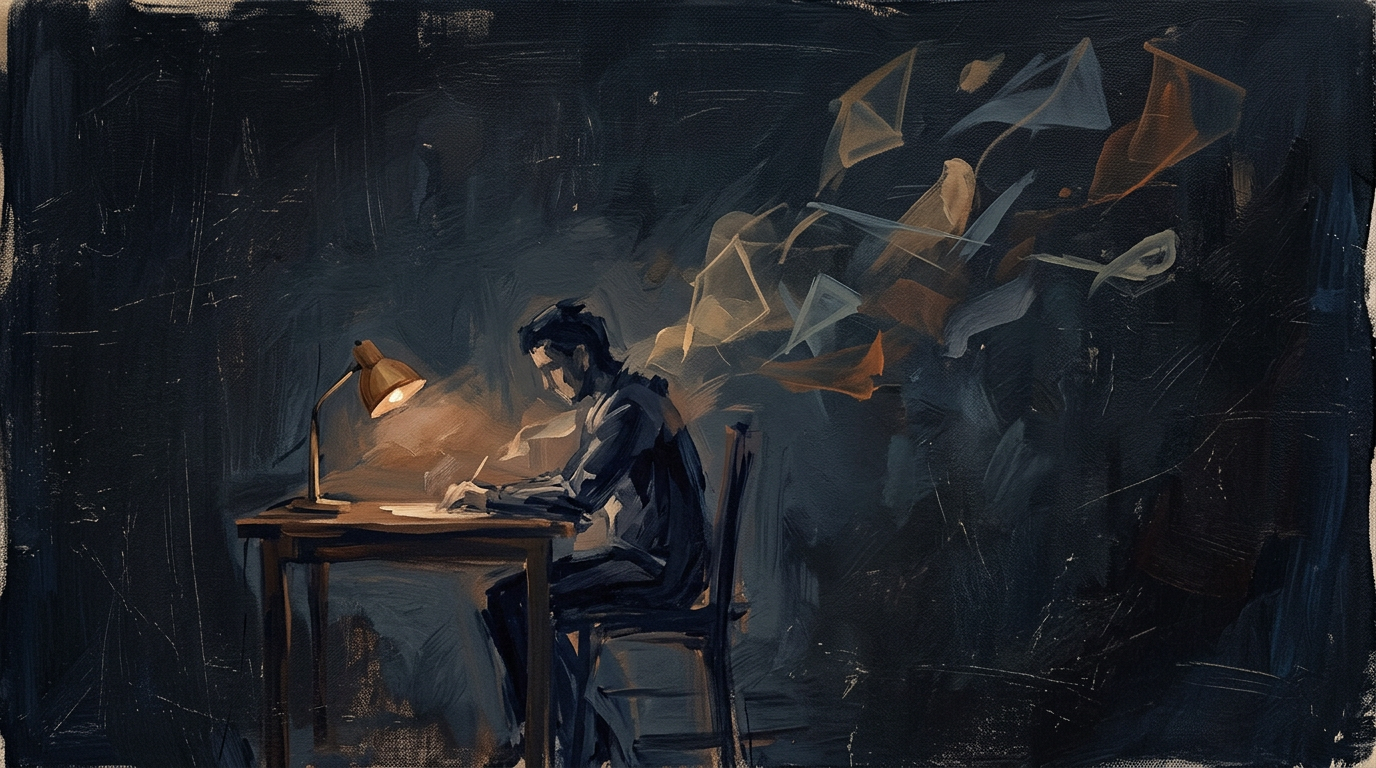
Rohan works in a corporate team. Every evening he writes out a task list for the following day a habit he has kept for years because it helps him feel organized and in control. One particular evening, he finishes nine out of ten items. Everything is done except one: reply to a client with the revised proposal. The task is small. It will take five minutes, maybe less. He decides to handle it first thing tomorrow and closes his laptop. That night, Rohan finds himself picking up his phone repeatedly without reason. He feels vaguely restless at dinner. The thought keeps surfacing,. the email, the client, the reply he has not sent, not urgently, just persistently. Like something quietly tapping at the edge of his attention. The next morning he sends the email in four minutes. And almost immediately, without anything else in his day changing, his mind feels lighter. Same job. Same workload. Completely different mental state. The email did not matter that much. What mattered was that it was unfinished and his brain had been refusing to put it down.
What the Zeigarnik Effect Actually Is
In the 1920s, Russian psychologist Bluma Zeigarnik made an observation that would become one of psychology's most enduring findings. Watching waiters in a busy restaurant, she noticed something unusual: they could recall the details of every open, unpaid order with remarkable precision. But the moment a table settled their bill, those same details vanished almost instantly from memory. Her conclusion was this the human brain holds unfinished tasks in a state of heightened, active awareness until they reach completion. An incomplete task creates a kind of cognitive tension that keeps the mind engaged with it, returning to it, tracking it. Once the task is finished, that tension releases and the mind moves on. The brain does not distinguish between a significant unfinished project and a five-minute email that slipped through the end of the day. Both stay open. Both consume mental bandwidth. Both keep the quiet reminder running in the background: this is not done yet.
Why Modern Work Creates So Much Invisible Exhaustion
The heaviest burden in most modern workplaces is not the volume of work it is the number of open loops. An unanswered message. A conversation that ended without a clear next step. A task started but not moved forward. A follow-up that keeps getting deferred. Each of these registers in the brain as an unresolved thread that requires monitoring. And your brain conscientious and thorough as it is keeps each one active, keeps returning to it, keeps generating the quiet reminder that it has not yet been closed. The result is a specific and frustrating kind of exhaustion. You end the workday feeling drained not because of what you accomplished, but because of everything your brain was silently tracking alongside the actual work. Mental fatigue in modern work is less about effort and more about the sheer number of things that were started and not finished.
Why Netflix Knows Your Brain Better Than You Do
Netflix ends every episode at the most unresolved, tension-filled moment and then counts down five seconds to the next one. This is not a coincidence or a convenience feature. It is a deliberate, informed design decision built on understanding exactly how the Zeigarnik Effect works. An unfinished episode creates cognitive discomfort. The story is open. The tension has not resolved. Your brain wants the loop closed and the easiest path to closure is the next episode, which Netflix has already queued. You watch not because you planned to but because stopping feels worse than continuing. The same psychological mechanism driving you through a third episode at midnight is the same one keeping you mentally restless at dinner after an unfinished workday. Netflix turns the Zeigarnik Effect into entertainment. Work turns it into exhaustion. The mechanism is identical in both cases.
The Real Productivity Cost
When mental bandwidth is occupied by unfinished tasks, your capacity for the work that actually matters quietly contracts. Deep, focused work requires cognitive space and open loops consume that space whether or not you are consciously thinking about them. Important, high-value work suffers because the smaller, unfinished, urgent things keep asserting themselves more loudly. Anxiety grows not from a single large problem but from a dozen small ones that were never fully resolved. The feeling of being constantly busy without actually being productive that specific and demoralizing experience is largely a Zeigarnik problem. You are not distracted because you lack discipline. You are distracted because your brain is doing exactly what it evolved to do.

How to Use the Zeigarnik Effect in Your Favor
Understanding the mechanism means you can work with it rather than against it. If a task takes less than five minutes, finish it immediately rather than deferring it. The mental cost of keeping it open far exceeds the time it takes to complete it. Small closures build momentum, free cognitive space, and create the kind of clarity that makes everything subsequent feel more manageable. End each working day with a deliberate closure ritual rather than simply stopping when time runs out. Before closing the laptop, identify what is fully complete and define the precise next action for everything that is not. Writing down a specific next step for an unfinished task is enough to signal to the brain that the loop is temporarily closed the mind no longer needs to actively track it because the continuation has been captured somewhere reliable. Break large tasks into units with genuine finish lines. A task described as "work on the presentation" gives the brain nowhere to land. A task described as "complete slides one through three" has a clear endpoint and reaching it produces a real sense of completion rather than the vague, ongoing heaviness of work that has no defined boundary. Think of productivity not as doing more but as finishing more. A workday where six things are fully completed leaves the mind in a fundamentally different state than one where twelve things were partially touched. Volume is not the variable that matters. Completion is.
The Bigger Lesson
Your mind is not tired because you are weak, undisciplined, or unable to manage your workload. It is tired because it is carrying unfinished stories small, open-ended threads that it is conscientiously refusing to release until they have an ending. The path to a calmer, sharper, more focused mind is not simply rest. Rest helps. But it does not close the loops. Only completion does that. Finish small things. Define next steps. Create endings wherever you can. A mind that ends the day with fewer open threads does not just feel better it shows up the next morning with more of itself available for the work that actually deserves it.