

Marc Benioff opened Dreamforce 2026 in San Francisco by calling it the most important Dreamforce in the company's twenty-seven-year history. By the end of the keynote, which brought Anthropic CEO Dario Amodei, NVIDIA CEO Jensen Huang, Siemens CEO Roland Busch, and Adecco Group CEO Denis Machuel on stage alongside Salesforce's Patrick Stokes, Rohan Kumar, and Miguel Milano, it was hard to argue otherwise. Salesforce didn't just announce new products this year. It announced a new interface for the enterprise itself.
Below is a rundown of what actually matters out of that keynote, if you're building on, selling, or running your business on Salesforce.

1. Zero data retention is still the foundation
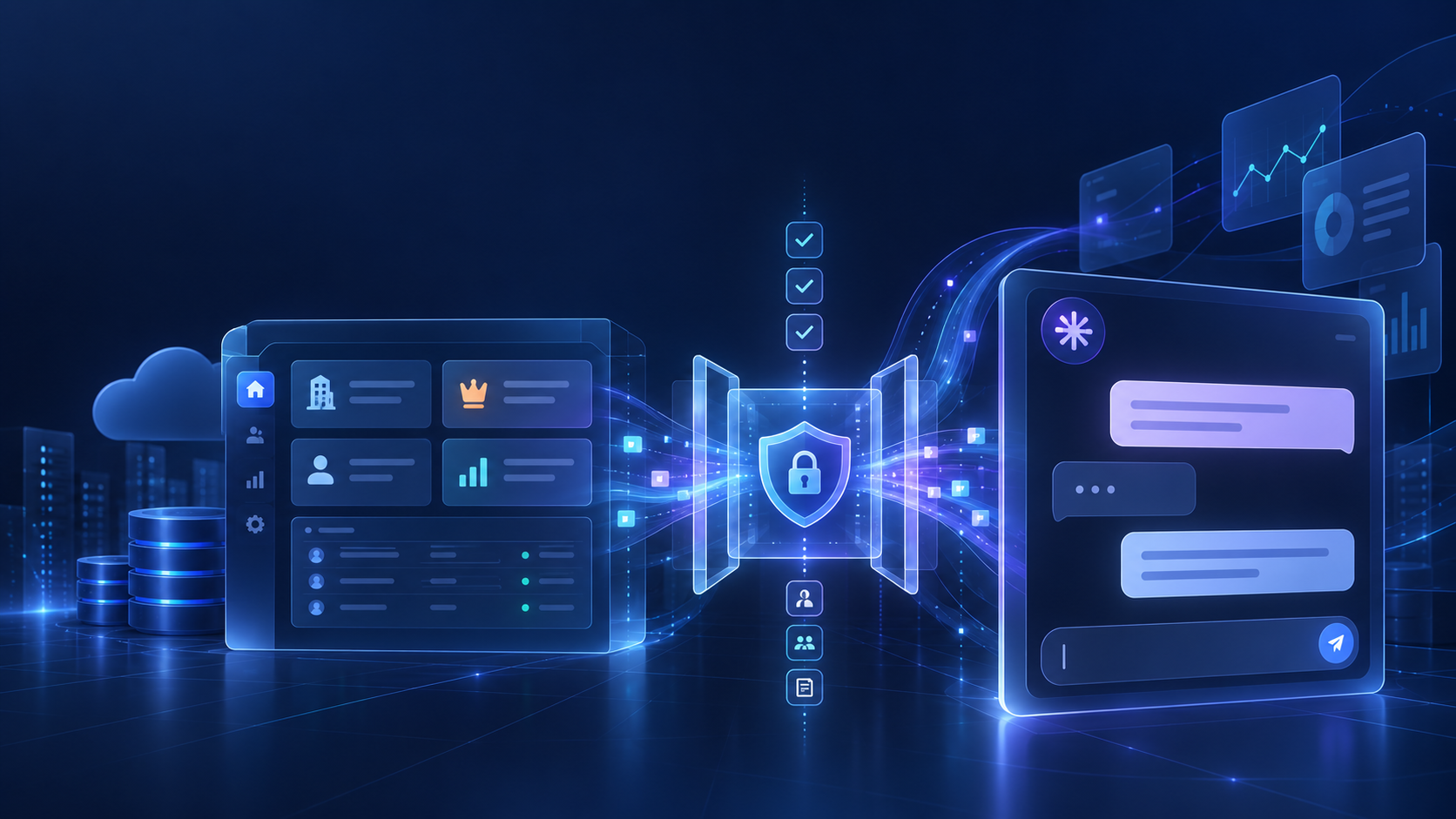
This isn't new, but Salesforce keeps saying it because customers keep asking. Rohan Kumar and Marc Benioff both repeated the same line: your data is your data. Every new AI product shown on stage, including the agentic interfaces, is built with zero data retention, and Salesforce says it's tested this repeatedly with its own security teams. Nothing you do inside Salesforce, or inside the new AI layers sitting on top of it, gets used to train someone else's model.
2. Salesforce is going UI-independent — and so is Astonous
The biggest idea in the keynote was AI Force, and the short version is that Salesforce has stopped assuming you'll come to it. Benioff put it well on stage: "for decades, we've had to go to software, open the app, find the screen, navigate the menu, go looking for what we need. AI Force flips that around... the enterprise comes to you."
What that looks like in practice: the same live, agentic interface, built on Salesforce's metadata layer, now shows up as Claude Force inside Claude (Cowork), as Slack Force inside Slack, and as a new AgentForce coworker inside Lightning. There's also an SDK coming so partners can build their own version of this on other platforms. Patrick Stokes demoed it live from inside Claude Cowork, building himself a working "command center" for pipeline and service data, firing off a real Slack message to his team, and logging Salesforce activity, without opening the standard Salesforce UI once.
We're building toward the same thing with our own products. Astonous Ship and ZapBills are both moving away from being apps someone has to log into and click through, and toward being services an AI model can just call directly. Point an AI model at Astonous Ship and it can run an entire shipping workflow on its own, rates, label creation, pickup scheduling, tracking updates, without a human touching a Salesforce screen. Point it at ZapBills and it can generate invoices, collect payments, and reconcile everything against your accounting system the same way. It's the same "meet people where they work" idea Salesforce is chasing, just applied to shipping and billing instead of the CRM layer itself.
- Astonous Ship on AppExchange: https://appexchange.salesforce.com/appxListingDetail?listingId=a0N3A00000FYgfoUAD
- ZapBills on AppExchange: https://appexchange.salesforce.com/appxListingDetail?listingId=6748a5b1-b0fa-4505-9e46-dfb41cfd54d9
3. Salesforce is shipping named agents, not just an agent platform
Instead of leaving customers to figure out what to build on Agent Force, Salesforce showed up with a bench of ready-made agents that any business user can turn on:
- Hunter, an outbound sales agent that Salesforce says generated $500 million in pipeline for its own sales org last quarter.
- Piper, an inbound pipeline and qualification agent. It was demoed live on the Siemens website, where it built a personalized partner-program pitch for a visitor and booked a meeting with the right account exec in a few clicks. I am trying to explore it for our own business, we need to figure out the pricing part because it is not clear anywhere on open documents. I believe piper works on Appexchange listings also along with website.
- Casey, a customer service agent that's handled over 5 million service conversations on help.salesforce.com.
- Page, for internal IT and HR service requests.
- Marshall, an operations agent that was shown learning Siemens' entire SAP supplier-onboarding process inside a sandbox in about 90 minutes, then running it autonomously, cutting what used to take days down to hours.
- Finn, a customer service agent Salesforce recently acquired and welcomed on stage as the newest member of the AgentForce family.
4. There's a new plugin behind Claude Force, and it's in open beta now
The thing that actually powers Claude Force is a new plugin called Salesforce for Claude. It bundles the parts that are genuinely annoying to set up yourself, MCP server connections, Claude skills, and zero data retention configuration, into something a Claude Enterprise admin can turn on with one toggle. It's in open beta right now on AppExchange:
https://appexchange.salesforce.com/appxListingDetail?listingId=plugin-sales-cloud-in-claude
You give Salesforce your org ID and your Claude org, and they turn on access from there.
5. Koa: Salesforce's own CRM reasoning model, built with NVIDIA
Rohan Kumar introduced Koa, which Salesforce is calling its first purpose-built CRM reasoning model for Customer 360. It's meant to support agents that have to work through multi-step, genuinely complicated situations, like figuring out the right next move on a sales opportunity that's stalling, or a support case that keeps bouncing around. Koa extends NVIDIA's Nemotron model, and Salesforce was clear that it was trained only on synthetic data. As they put it, not a single byte of customer data went into it, which keeps it in line with the zero-retention story running through the whole keynote.
6. AI Force, in plain terms, is four layers working together
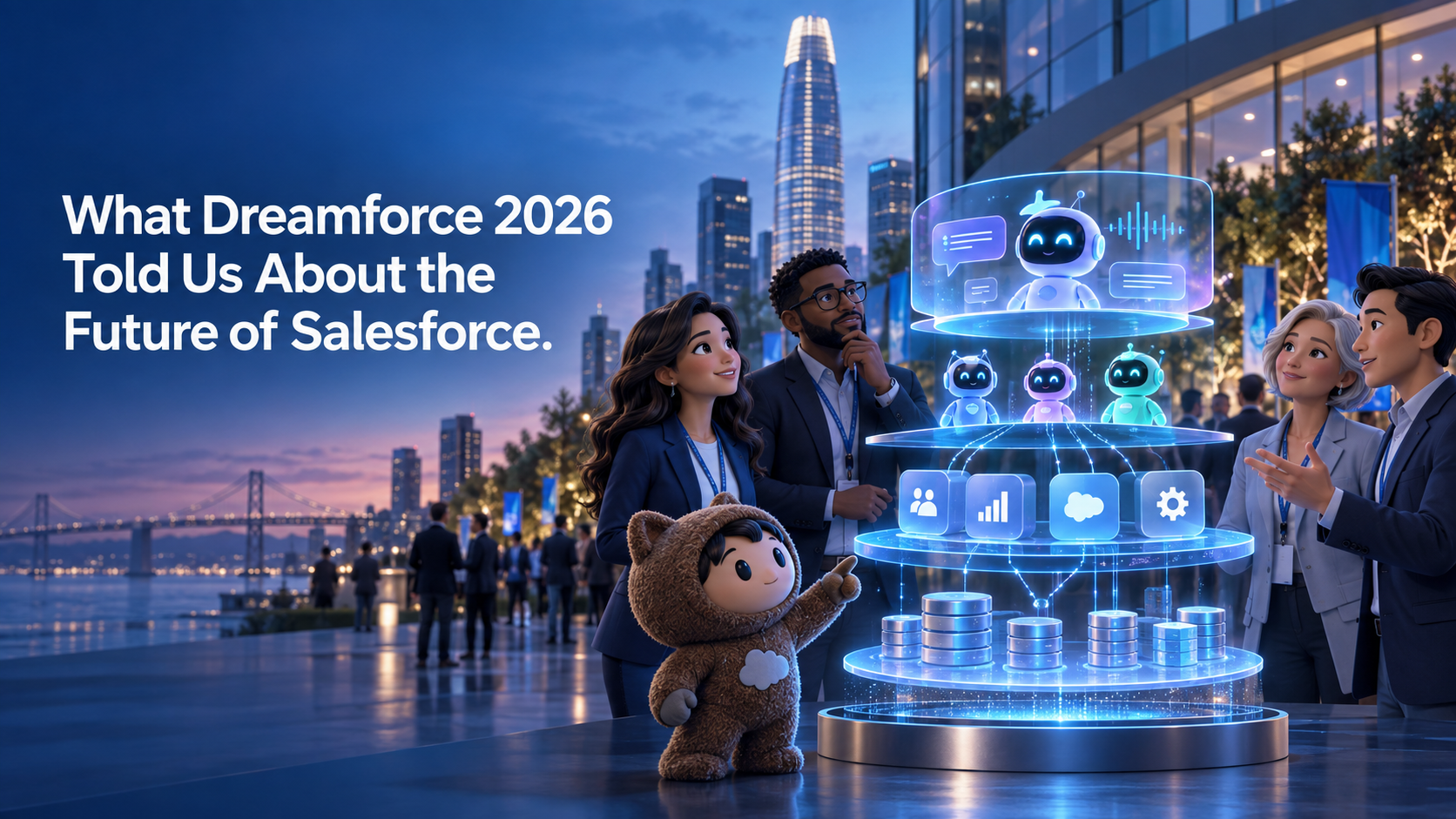
If you strip away the branding, AI Force comes down to four layers Salesforce has been building for years, now finally tied together: data (Data 360, Informatica), applications and semantics (the newly headless Customer 360 apps, plus Tableau), agents (Agent Force and everything named above), and a new, dynamic interface layer that can show up inside Claude, Slack, Lightning, or wherever else people already work.
The argument Benioff and Dario Amodei both made is a fair one: general-purpose AI models are smart, but they know nothing about your specific business, your customers, your pipeline, your permissions. Grounding a probabilistic model in that deterministic, company-specific context is what turns "smart" into something an enterprise can actually rely on.

7. Someone has to manage all these agents, so Salesforce built that too
Once you've got dozens, or hundreds, of agents running across a business, someone needs to know what they're doing and what they cost. That's what Salesforce Guardian and Agent Fabric are for. Guardian, an evolution of Shield, focuses on agent identity (catching agents that start behaving oddly) and data security. Agent Fabric, built on top of MuleSoft, gives IT teams one registry to see every agent running across the business, regardless of vendor, Azure, AWS, Google, or Agent Force, along with performance, error rates, and, importantly, what each one is costing you in token spend. If you're an SI or ISV partner shipping agent-based work into a customer's org, this pair is worth understanding early, since it's clearly where Salesforce expects the "who's accountable for this" conversation to happen.
Where this leaves the rest of us
Pull all of it together and the message from this keynote is pretty straightforward: the next round of Salesforce value isn't going to live only inside the Salesforce UI anymore. It's going to show up wherever people already work, running on the same governed, zero-retention data Salesforce has always protected.
That's not a foreign idea to us. We're already building Astonous Ship and ZapBills in that direction, and this keynote is a good sign we're pointed the right way.
For a second take on the keynote, Salesforce Ben's write-up is worth a read too: The 6 Biggest Takeaways from the Dreamforce '26 Main Keynote.