“Ugh, I just want today to be done already.”
That was my only thought one Tuesday evening, stuck in traffic near Gopalpura flyover, inbox overflowing, Teams pings still haunting my brain. That day at work was classic chaos: client escalation, last‑minute deck change, chai break missed, lunch eaten half cold at my desk. By 4:30 pm, I wasn’t working, I was just… surviving. Out of frustration, I did something tiny. I stepped out on the office balcony for 3 minutes. No phone, no email, just me, Jaipur sky, and random thoughts. I noticed the sound of traffic, someone laughing on a call, the smell of someone’s tadka from the pantry. Three minutes later, my problems were still there, but my mind felt 20% lighter.
That became my “micro joy”.
Not a big habit. Not a morning routine. Just a 3 minute balcony pause. It didn’t change my job. But it completely changed how my 9 to 5 felt.
What are “micro joys”?
Micro joys are tiny, everyday moments or habits that give you a small spark of joy, calm, or relief without needing a vacation, promotion, or life makeover.
They are:
- So small you can do them even on your busiest day.
- So simple you don’t need willpower, apps, or planners.
- So personal they feel like private rituals in the middle of office madness.
A few examples:
- A 3‑minute balcony or corridor break between meetings, just to breathe and look at the sky or trees.
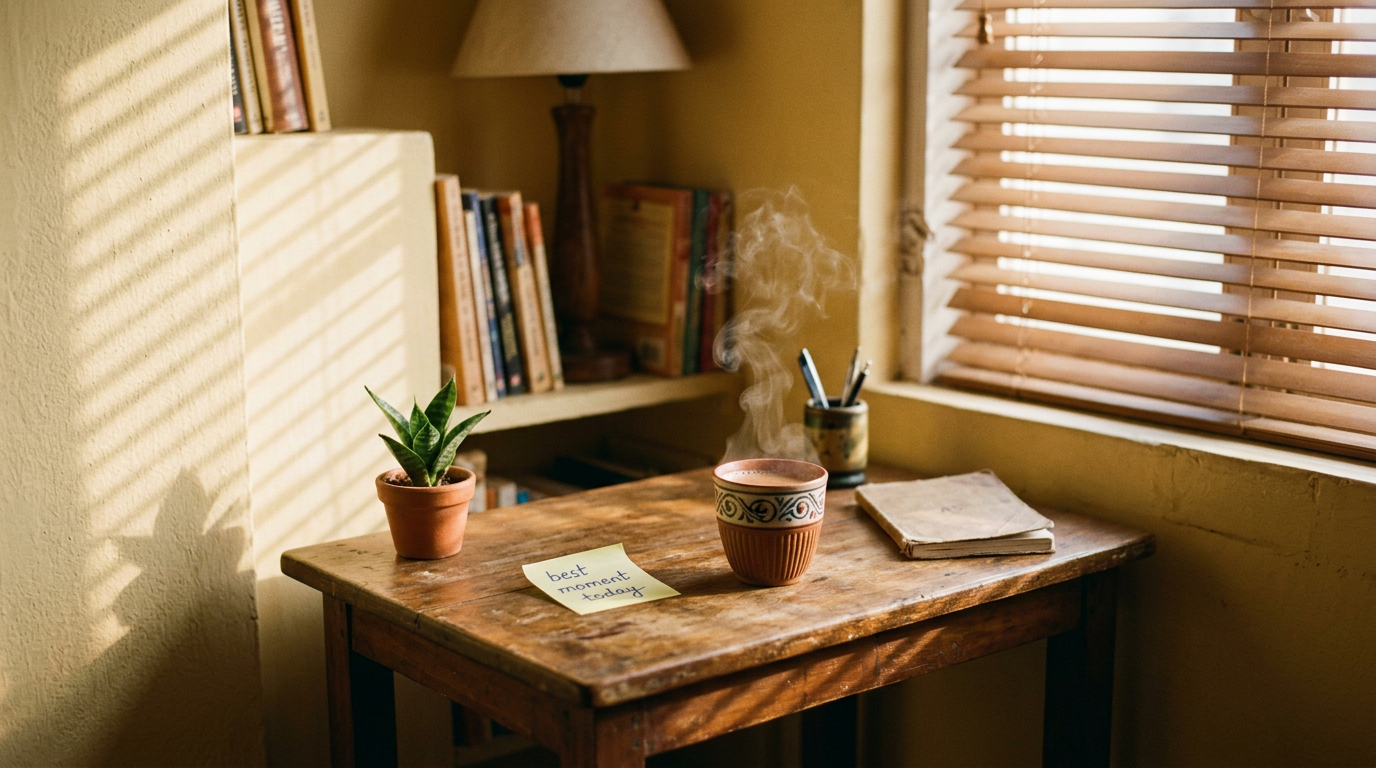
- A quick gratitude note in your notes app: “Best moment today: colleague shared samosa in the 4 pm slump.”
- A 5‑minute desk stretch with headphones on, doing nothing heroic, just rolling shoulders, neck, wrists after nonstop typing.
These are not productivity hacks. They’re like mini “reset buttons” for your mind during a normal Indian workday.
The science behind small habits
Psychology and habit research say our brains respond strongly to small, repeated actions.
- Tiny habits are easier to start, so we actually do them.
- Each small win gives a little dopamine boost, making the habit feel rewarding.
- Regular positive moments, even 2–3 minutes long, can improve mood, reduce stress, and make us less reactive.
You don’t need a one‑hour morning routine at 5 am.
You just need small, consistent moments that tell your brain:
“I’m not just a machine replying to emails. I’m a human who gets to feel good for a few minutes every day.”
Over weeks, these micro joys quietly change:
- How you think about your workday.
- How you recover from stress.
- How much energy you have left after logging off.
10 office‑friendly micro joys you can start today
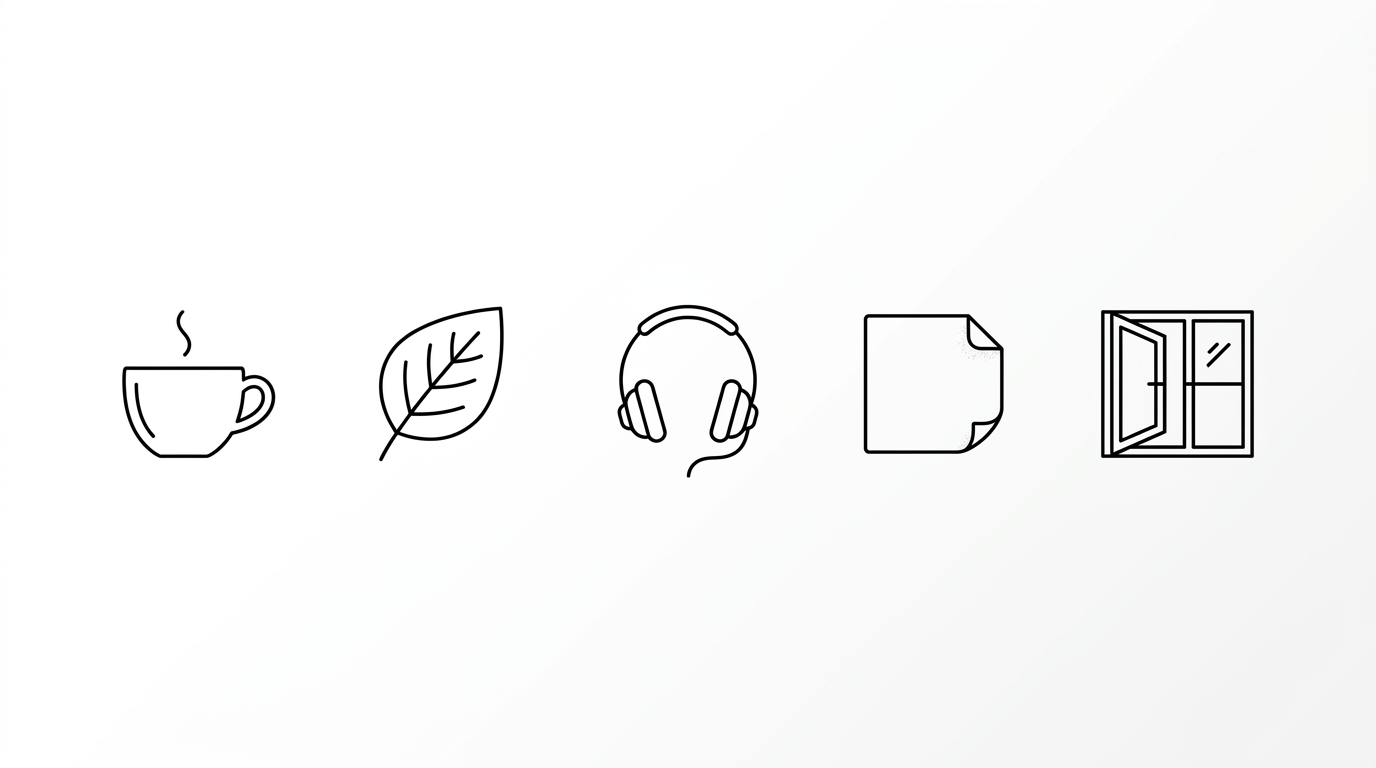
- The 3‑minute chai ritual-> Not the big gossip‑chai, just a small personal one. Once a day, make yourself chai or coffee and drink the first few sips without touching your phone or laptop. Notice the smell, the warmth, the taste. Let it be your “pause” button between tasks.
- One line about your best moment-> Before logging off, write one sentence: “Best part of today was…” It can be tiny—someone cracked a PJ, your code finally worked, your boss said “good job”, office admin added extra biscuits. Try this for 3 days and notice how your brain starts searching for good moments during the day.
- The “window or balcony” check-> After a tough call, walk to the nearest window, balcony, or even staircase. Look outside for 2 minutes. Count how many bikes, trees, or clouds you see. It sounds silly, but it gently pulls your mind out of overthinking mode.
- Micro stretch after every long sitting block-> After every 90 minutes of sitting, stand up for 2 minutes. Roll your shoulders, rotate your neck, stretch your wrists (especially if you type all day). No gym clothes, no “fitness motivation”—just enough movement so your body doesn’t feel like a statue.
- One kind message a day-> Send one small, genuine message: “Hey, thanks for helping with that deck,” or “You explained that really well in the meeting.” No overthinking. One line. Hit send. It lifts their mood and quietly lifts yours too.
- The lunchbox gratitude moment-> If you bring a dabba from home or order from outside, pause for 10 seconds before eating and think: “Someone made this / delivered this / I’m able to afford this.” Then eat slowly for the first 3 bites. In the middle of noisy office lunch, this feels surprisingly grounding.
- Playlist for commute decompression-> Create a 10–15 minute playlist only for your commute back home songs that make you feel light. As soon as you step out of office or log off WFH, play it. Let it signal: “Work day is over. Brain, you can relax now.”
- Tiny desk reset at 4 pm-> At around 4 pm, when energy crashes, spend 2 minutes cleaning your desk: stack papers, close extra tabs, clear crumbs, refill your bottle. A slightly cleaner space feels like a fresh start to the last stretch of the day.
- Micro joy object on your desk-> Keep one small thing on your desk that makes you smile—a photo, a tiny plant, a funny note, a festival decoration, even a Chhota Bheem sticker. When stress spikes, look at it for 10 seconds. It’s a mini reminder that life is bigger than this one email thread.
- Power‑cut or tech‑issue pause-> When internet drops, system restarts, or VPN crashes (hello, India), instead of instantly getting irritated, use that forced pause. Stand up, drink water, look around, share a joke with a colleague, or just breathe. You can’t fix the power cut, but you can choose what you do with those 3–5 minutes.
How to stay consistent without “discipline”
You don’t need a new personality. You just need to “attach” micro joys to things you already do.
A few simple tricks:
- After opening your laptop: Take 3 deep breaths before checking email. Make it a rule: laptop on → 3 breaths → then inbox.
- After your first chai or coffee: Write your “best moment from yesterday” in one line. Drink + one sentence. Done in under a minute.
- After lunch: Do a 2‑minute walk—inside the office, corridor, or terrace. Lunch → walk → back to desk.
- Before your first meeting: Look at something non‑work (plant, sky, photo) for 30 seconds. Meeting = slightly calmer version of you.
- Before logging off: Do your one‑line “best part of today” ritual and a tiny desk reset. This creates a soft boundary between “office you” and “home you”.
"Enjoy the little things, for one day you may look back and realize they were the big things."
— Robert Brault
"Happiness is not something ready made. It comes from your own actions."
— Dalai Lama